Carrot started out helping employers offer fertility and family-building benefits. Today it supports people from the months before conception through pregnancy, postpartum, perimenopause, and menopause, with men's health and low testosterone care in the mix too. In this episode of HealthTech Remedy, Dr. Trevor Royce and Dr. Tim Showalter look at why employer-sponsored care fits this market so well, and why a company founded before the AI boom may be in a great spot thanks to years of real-world data.
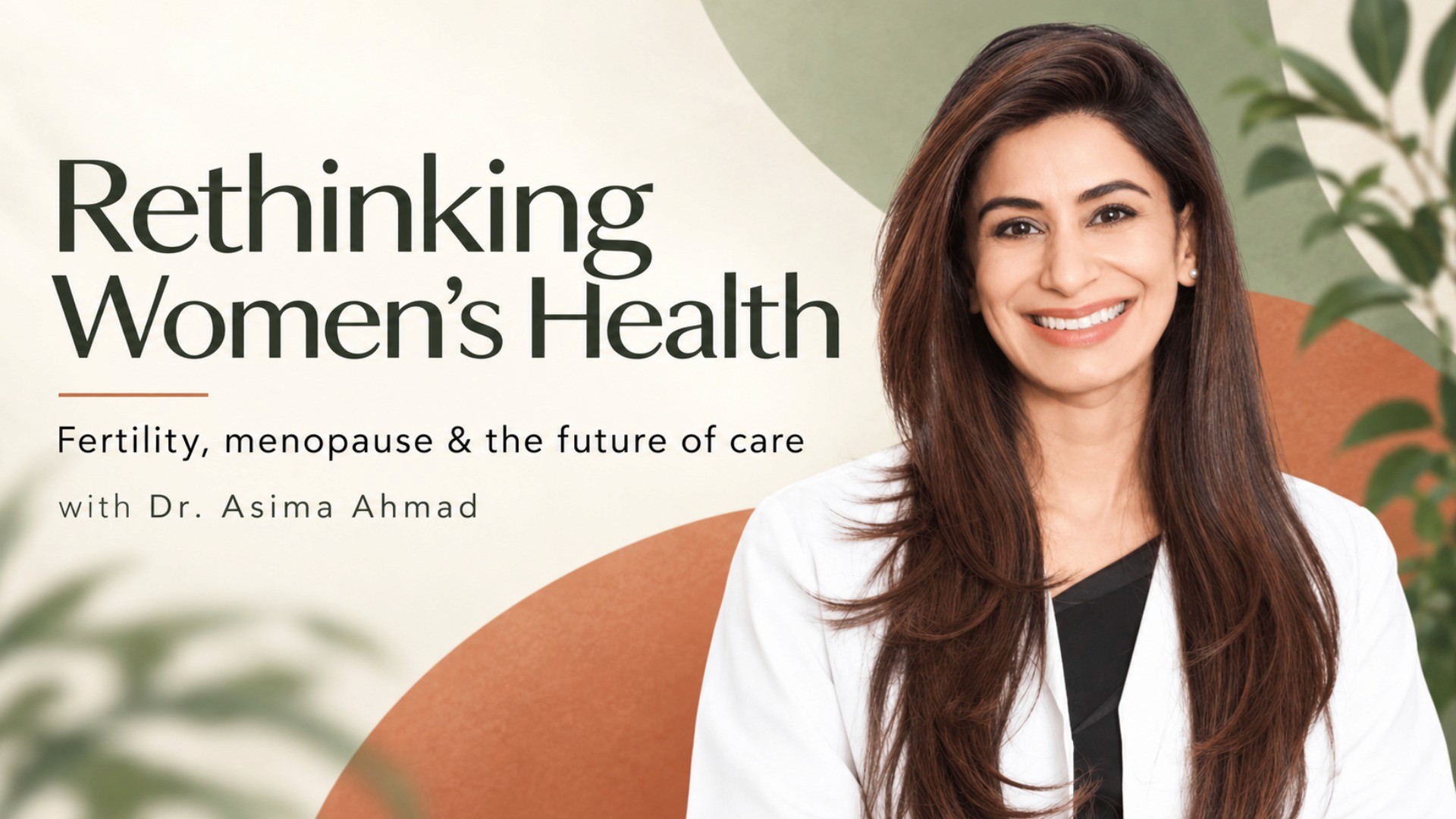
Then they sit down with Dr. Asima Ahmad, Carrot's co-founder and chief medical officer and a practicing reproductive endocrinologist. She shares how losing an aunt in Pakistan to preventable pregnancy complications pulled her toward women's health, how a supportive fellowship director at UCSF made room for her to start a company during training, and why Carrot chose to talk about fertility rather than infertility so it could serve single parents, same-sex couples, and families on every path to parenthood.
Dr. Ahmad also digs into metabolic health, noting that only 12% of U.S. adults have ideal metabolic health, and explains how Carrot's Sprints program uses the "premester," the three to twelve months before trying to conceive, to build lasting habits around sleep, stress, nutrition, and movement. She walks through Carrot's approach to midlife care, how personalization keeps people engaged, and the Milliman-validated results behind it all, including a 24% higher IVF live birth rate than the national average, 32% fewer NICU admissions, and a 45% reduction in postpartum depression.
Episode Resources:
Transcript
Dr. Tim Showalter:
[0:00] Morning.
Dr. Trevor Royce:
[0:00] Good morning, Tim.
Dr. Tim Showalter:
[0:02] I got to share, this is my last day in Virginia before a five-day trip to Montana, which is pretty fantastic.
Dr. Trevor Royce:
[0:09] Amazing. Probably a great time of year in Montana.
Dr. Tim Showalter:
[0:12] It's going to be beautiful. We can do some horseback riding, maybe a little fly fishing, but definitely a lot of fun. It's going to be with a fun group of people for my friend's 50th.
Dr. Trevor Royce:
[0:21] A river runs through it. Yes, for sure. You're just living it.
Dr. Tim Showalter:
[0:26] Yes i've got my uh costumes already for a 90s theme party and a western chic party so i'm right here.
Dr. Trevor Royce:
[0:34] So this will give you good ideas for your birthday party.
Dr. Tim Showalter:
[0:36] Yeah i think mine's gonna be a little more understated but maybe maybe in virginia but it's gonna be a ton of fun i'm excited for it.
Dr. Trevor Royce:
[0:43] That sounds like great truck let's get this.
Dr. Tim Showalter:
[0:45] Episode in well let's get a little bit of work done before then i guess let's hop in.
Dr. Trevor Royce:
[0:48] Let's make it happen, Welcome back to HealthTech Remedy. This is the show where physician leaders in health technology break down the stories behind today's most innovative health companies. And we speak with the leaders shaping the future of care. I'm Trevor Royce, an oncologist and researcher working in AI diagnostics.
Dr. Tim Showalter:
[1:07] And I'm Tim Showalter, a radiation oncologist and former med device entrepreneur now focused on scaling AI technologies for healthcare. And today we are talking about Carrot. This is a company that have initially became known for fertility and family building benefits, but has increasingly expanded its focus into a much broader women's health platform. It ranges from fertility, pregnancy, metabolic health, perimenopause, and menopausal care. And later in the episode, we'll speak with Dr. Asima Ahmad, who's Carrot's co-founder and chief medical officer. And Asima is a reproductive endocrinologist who's continued practicing medicine while helping build Carrot and her own career is an interesting part of the story. Quite an impressive individual but before we bring her in Trevor let's let's give a little bit of background about carrot and why this particular market is so interesting.
Dr. Trevor Royce:
[1:56] Yeah sounds great and credit to the founder and entrepreneur Dr. Ahmad like she clearly is a super impressive person and look forward to getting the interview with her but to kind of set the table as you mentioned carrot initially started, fairly focused as I understand it on fertility benefits basically and employee-sponsored fertility and family-building benefit. And I'm sure we'll get to this in an interview, but this is such an area well-suited for health technology and entrepreneurial, trying to get these services to working, adults that otherwise wouldn't get to them. And increasingly, this is an important story, I feel like, in the world of employer benefits. And people with delayed childbearing across the U.S. Broadly, just timing for this type of thing is right. She's been working in this area for a long time. So let's talk a little bit about kind of like what Carrot might offer. And when I was looking at their website earlier, you know, not only the kind of classic family planning or fertility preserving services like eggs, sperm, embryo freezing, but also, you know, assisted reproduction, gestational surrogacy, even adoption. You know, these are all part of that continuum. Yeah. And recently, even into obviously menopause, but men's health as well, things like testosterone levels, which is a big topic nationally right now. And Tim, I'm sure as a GU oncologist, you've had your fair share of testosterone replacement discussions, but I feel like it's increasingly on the mind of our patients.
Dr. Tim Showalter:
[3:25] Yeah, I'm now like on a texting level with like the local clinic for that. So it's definitely part of the current zeitgeist. I think that the thing that's also interesting to me about Carrot, and I think this is an important component of the business model and how they can impact workers and patients positively, is the fact that it's tied into employers so often. So this is a step where it's not just receiving the care, but also navigating the process and financing the process is so important. Many people can easily spend tens of thousands or hundreds of thousands of dollars in receiving care related to fertility and family planning. And it is actually a great example where direct employer services can be an important part of a better solution.
Dr. Trevor Royce:
[4:12] Totally. And, you know, I think what we're seeing as they evolve with their offerings and services from focusing on, say, fertility and menopause, but really becoming more of a whole health company, not only for women, but into men's health as well. Basically, a longitudinal health women's health platform.
Dr. Tim Showalter:
[4:28] I've, you know, from reading a little bit about this, I like the way Carrot has connected this sort of fertility moment in someone's life, like a pre-mester, about really an opportunity to improve health overall. So, you know, want to talk to Dr. Amad a little bit more about this, their focus on metabolic factors during the premaster and what they call a sprints program, which is essentially turning interventions that focus on insulin resistance, addressing, insulin resistance, weight and body composition, exercise, sleep, all the important aspects of general health. Into a really structured intervention supported by a digital platform and catching people right as they're doing in really important family planning, healthcare steps, and are committed to that process, I think is a really, important time to catch people on their overall health journey.
Dr. Trevor Royce:
[5:19] Totally. And like, you know, just to be explicit, but like, what could be a better mission than like helping, you know, young families grow and letting people have kids? I mean, that's kind of what it's all about. So it's definitely mission driven and obviously clearly rooted in our own expertise company, which is great.
Dr. Tim Showalter:
[5:34] Yeah. They're clearly also creating a sort of unique presence as the full life cycle company for women's health too. I really like this transition to offering more support around perimenopause and menopause. This is an area that's pretty hot within health technology. Clearly there's not enough access to high quality care and I think digital platforms can really help address that. And this connects to behavioral health, hormone replacement, overall wellness. And based on my particular demographic, it's something that I hear that the women in my community talk about pretty often. And it can be hard to get into the few brick and mortar clinics. And often, increasingly, we're hearing people benefit from these new health technology providers. Totally.
Dr. Trevor Royce:
[6:30] I guess just to kind of, wrap up some core themes that we'll probably want to touch on in the interview, but any thoughts on your end on how this type of platform or these services, would be influenced or impacted by, you know, this AI era?
Dr. Tim Showalter:
[6:43] Yeah. I mean, I think one, this is particularly like with using fertility as an example. I think that the opportunity to reach people who are at busy points of their careers, or who are in areas where they might not otherwise have access to a high quality provider, either for reproductive endocrinology or for men in buzz care is a great example of using technology to have, a team of experts who are following, you know, well-vetted guidelines or practices to reach more patients, which is, I think, a huge part of this. Yeah.
Dr. Trevor Royce:
[7:20] Yeah. I think clearly when you're offering this type of service for employers, you're inevitably collecting a ton of data and that data can, reinforce, you know, your products and probably pretty valuable ways like identifying those that, to your point, would benefit from earlier interventions because these fertility, processes could take a really long time. Identifying key behavior changes early that could improve fertility and other health outcomes and even using AI to define what those measurable outcomes are. When you start building up large data sets like this through the employer-delivered care, I think it puts them in a really powerful position to not only like obviously serve as a platform to provide these services and enable them, but actually to improve them.
Dr. Tim Showalter:
[8:01] Yeah, I agree. And actually, when you think about AI and technology in this space, there's the like platform aspect where you can serve a larger population, potentially at a lower cost and just constantly improve your processes. And so I do that as sort of a utilization and cost management approach. Increasingly, as technology improves, I think there's also an opportunity for more individualization. So, you know, using AI and technology as a way to manage complexity and meet patients where they are, I think, is also a good opportunity that you wouldn't think of traditionally, as enabled purely by telemedicine, but certainly with AI and more advanced analytics and advanced approaches, I think it can get you there.
Dr. Trevor Royce:
[8:46] Yeah. Yeah. And sometimes I wonder, like, it's almost overlooked where these companies that were successful and became established as health technology companies, kind of pre-2020 or whenever you want to call the AI era, you wonder if they were too early and they, you know, they weren't founded around this large language model era. But actually, they're pretty well positioned because they've gotten 10 years of data collection from real-world data or whatever their data sources are. And now they're very well primed to apply these new methods and techniques. So I think here it's super well positioned in the AI era, even though they've been around.
Dr. Tim Showalter:
[9:17] Oh, that's a fascinating space. Yeah, like your longevity to date creates your data mode and opportunity to really leverage this new wave of technology. Yeah, I think that checks out. That makes a lot of sense to me. Well, should we go ahead and transition to our time with Dr. Ahmad?
Dr. Trevor Royce:
[9:33] Let's do it. Looking forward to the interview.
Dr. Tim Showalter:
[9:35] All right, stick around. Welcome back to HealthTech Remedy. We have Dr. Asima Ahmad, co-founder and chief medical officer of Carrot. Welcome to the show.
Dr. Asima Ahmad:
[9:50] Thank you so much for having me. Excited to be here and chat with you both today.
Dr. Tim Showalter:
[9:53] It's great to hop in and learn more. And I want to ask you a lot about Carrot and understand what you're up to new there and sort of some of the details of the company. But before we get into that, I'd love to start with your own career. I'd love to hear what initially drew into medicine and particularly into women's health and ultimately reproductive endocrinology?
Dr. Asima Ahmad:
[10:15] So I'll give you the shorter version, but I've always been interested in science. I thought I was going to study genetics and be a researcher and be in the lab. And when I went to college and actually did spend some time in a lab, I realized I needed to have that patient face-to-face or at least face-to-face interaction. At that point, I hadn't even determined if I wanted to be a physician. And during college, I read something that said, if you save a man, it says if you saved all of mankind and if you kill a man it says if you've killed all of mankind and to me that just put things into perspective in that one life has an impact on so many people in the world around them and that even just helping that one person just like not even necessarily saving life just making their health or making their life move in a positive direction can be so impactful for not only them but also those around them.
Dr. Asima Ahmad:
[11:04] And the reason I chose women's help was because I had a family member, an aunt in Pakistan who suffered through multiple stillbirths as well as a neonatal death that occurred within a day of life. And she had one child that survived and it was after her last stillbirth that she suffered through a postpartum hemorrhage, didn't make it to the hospital in time and basically passed away. And so through her story, I realized There were so many things that were preventable for her. And so many things happened over every single part of her health, like having access to high quality care, having the education and knowing her options on where she could deliver, how she could deliver.
Dr. Asima Ahmad:
[11:45] Having ongoing care where if there were issues arising with her pregnancy, she would have recognized that earlier and would have been able to prevent the death of her children. And also her own death, given that she didn't have immediate access to urgent or emergent care.
Dr. Asima Ahmad:
[12:03] In that situation when it arose, was an eye-opener for me in that there's so many things that we can do to help prevent these poor outcomes. And that's the story of someone living in a village in Pakistan but this is also an issue in the United States and even in more developed areas, and so that was what kind of pushed me into women's health care and the reason I chose REI reproductive endocrinology and infertility was when I was looking into women's health I felt that there wasn't much discussion around the topic of infertility when people thought about families it was more about family planning and contraception which is equally important and, I absolutely support. However, people weren't really talking much about those who are having difficulty building their families. There weren't as many resources. It was also a very hush-hush topic with some stigma and taboo around it. So I wanted to change the conversation there and help to create solutions that would also help to increase access to care and improve outcomes in the both, short-term and long-term.
Dr. Tim Showalter:
[13:03] Oh, thank you for sharing that. And it really drives home the point that all of this has major impact at the family and community level as well. Stepping a little bit even wider into the population level or the sort of national or international level, I know that you also pursued a master's of public health degree.
Dr. Asima Ahmad:
[13:23] Yes.
Dr. Tim Showalter:
[13:24] In addition to your medical training. And I know from my own experience with that, that often reframes your focus as a physician and helps you think a little more broadly about impact and facing the system challenges. How did your experiences both from the medical side and the MPH side overall shape what you're doing at Carrot now?
Dr. Asima Ahmad:
[13:45] Yeah. And to even go back and explain like the MPH in general, I always had an interest in global health. And so when I was thinking about taking that time off during medical school to pursue this other degree, which at that time was not very common, I did have to seek permission to make sure it was okay. I was actually thinking about my MBA versus MPH because I was thinking about global health, but also thinking about how to improve care for populations and large groups of people in addition to that one-on-one patient care interaction that you have. So, in looking at both, I did do the MPH, but then in a way, like doing Carrot also helped me with an MBA, you know, real MBA in a way.
Dr. Tim Showalter:
[14:28] Real MBA.
Dr. Asima Ahmad:
[14:31] So, I mean, that background really helped shape what we're doing with Carrot in that it helped me, and this is something that we decided from the very beginning, is understand how to create a company that would be addressing global needs from the very start. We didn't want to be U.S. only, we wanted to be global from day one. And one of the things that that shaped was our approach we we wanted to talk about fertility we didn't want to talk about infertility our our goal was we're going to remove the taboo this makes the stigma around this topic like growing your family and and all that has to do with your fertility and not necessarily needing a diagnosis of infertility which means that that for, We were providing care or basically access to care for people who might be single intending parents, be in a same-sex relationship, those who might need to do IVF, for example, or IUIs, or even those who might need to work with a gestational carrier or maybe on an adoption journey. So all paths to parenthood were covered. And from the very beginning, we understood just how much local laws, regulations, culture, religion, someone's background may impact the types of treatments that they may consider acceptable or the types of treatments that they may be able to access. So I think having done that, MPH really helped, number one, shape what I wanted to do, and set me up for that, but also with our approach to carrot and making sure that we were thinking of a comprehensive solution for all types of people in different parts of the world.
Dr. Trevor Royce:
[15:59] Yeah, it's an amazing story you're weaving together here. It's got the personal experience and drive. You talked about your family member. That was sort of a motivation for going into medicine broadly and then recognizing your desire to have population level impacts. And of course, we'll talk about this, but you can absolutely claim you've achieved that. It's a global company with over 10,000 providers. I mean, it's an incredible thing that you built. And that's why I love hearing this origin story. Tell us a little bit about that time during fellowship and how you knew that this was the right time and the right thing to tackle with Carrot in those sort of early founding days.
Dr. Asima Ahmad:
[16:32] I'll be completely transparent. I didn't know that. I actually didn't think I was going to go into an entrepreneurial role. I imagine that I would, you know, I did an internship with the World Health Organization a few years before that. And I was like, well, maybe I'll go back and work there. I loved the community there. I love the people there. I still have some mentors from there and people that I keep in contact with. And so this...
Dr. Asima Ahmad:
[16:55] World of startups and all that was completely new to me. And I, number one, hadn't thought about it. Number two, I didn't know if my fellowship would support it. But luckily, and it was one of my top choices for fellowship, and my fellowship director, Dr. Marcel Cedars, was amazing because I went to her and I said, hey, I have this opportunity. It's not what I initially envisioned myself doing to help think of more population health solutions, but there's so many ways to tackle health care. There's so many things that can improve. And I think this may help increase access. And one of the reasons I did go to UCSF was that they had a program where we were able to treat patients who normally would not be able to access fertility treatments like IVF. We had cost-effective solutions and a special program built out for them. And I wanted to receive that training and be able to work with those populations. And essentially what she said was, OK, like, make sure you're doing everything that you need to do for fellowship. And if you need to do this after hours or whatever, that's absolutely fine. And so it was through the support of my fellowship director. This was not something that they, you know, a lot of people were doing back in the day during fellowship. But it was through that support and having an open mind of, hey, there's more than one way to tackle this whole population health issue is what kind of led me down that road.
Dr. Trevor Royce:
[18:13] And initially, Carrot was focused almost entirely on fertility, I believe, correct me if I'm wrong, and then has since expanded into all sorts of different health areas and adjacent domains. And I'd love to hear a little bit about that. But out of curiosity, a natural tension we hear a lot in our show as we interview physician entrepreneurs is the tension between being able to continue some sort of medical practice versus, you know, giving all your time to whatever you're building. I'm curious, have you been able to practice along the way or have you had to focus entirely on building Carrot?
Dr. Asima Ahmad:
[18:42] I have been able to focus on my, one, I was still training when I started CARET, so I was able to finish my fellowship and do the research and all that I needed to to complete that. But in addition to that, I did continue seeing patients. And the reason for that is that I felt, and as well as our group of co-founders, that my one-on-one experience in the clinical setting helped also guide what we develop and improved within the CARET solution. Because it's kind of like having your finger on the pulse. You're seeing the day-to-day changes in how patients come into clinic, the type of knowledge that they have or the gaps in knowledge that they have and where are they getting that knowledge? Where are they getting their support? Where do we feel like there's still large issues that aren't being addressed, right? Like the emotional support or people's ability to understand what these medications are, how to take them, the importance of how time makes a difference in their final outcomes and what their options are. You know, I think one of the things is, yes, we started off as a primarily fertility solution. I'm an REI, Product Brown Necology and Fertility Specialist. And so for me, having also trained in OB-GYN, having an interest in women's health.
Dr. Asima Ahmad:
[19:54] And my co-founder, Tammy, also was aligned on this, is that we wanted to make sure that, we definitely had that starting point, but we wanted to expand our offering because we saw that, yes, providing the financial piece, providing the ongoing support during IVF and your fertility journey was important, but there's a lot more that comes before that and there's a lot more that comes after that. There's that preventative and that proactive approach when it comes to this. And I think for those in healthcare, given that you guys are in it as well, you likely agree in that many people, that's both, you know, care providers and patients alike have a.
Dr. Asima Ahmad:
[20:31] Reactive sort of approach when it comes to medicine. Something has to go wrong and then I will go see someone or some large event has to take place like I found out I'm pregnant then I go see this and what we want people to do is start thinking about those things even beforehand so when they start embarking on that pregnancy or that conception or trying to get pregnant journey that they're in a better state of health than when they were starting off because that may help to get them to their goals faster maybe with lower cost interventions fewer medications, and also have them help them have a healthier ongoing pregnancy and what we do is we try to engage them early on like we have a program called sprints which takes place during the preconception window so those we call it the premaster but the the three to 12 months leading up to when they're trying to get pregnant so that they can optimize their health, and start partaking like what we want to do is engage them in ongoing activities and lifestyle modifications like improving their nutrition, sleep, stress, and movement, that they'll continue on not just after they get pregnant, but during pregnancy, postpartum, and then also providing that same type of support through midlife, perimenopause, menopause, and, for men also like low testosterone, like when their hormones change later on in life. So we wanted to make sure that we took this longitudinal, continuous approach, but we had to start somewhere. And what we did was then built on that over time.
Dr. Tim Showalter:
[21:56] That's great. And I want to spend a little more time hearing more of your thoughts about the connection between, metabolic health and lifestyle interventions with both fertility considerations and I think your broader sense of women's health, even moving into the midlife space. Can you pull that thread for us and just expand on that a little bit?
Dr. Asima Ahmad:
[22:17] Yeah. So if you think about it, most Americans, actually even globally, we're just more sedentary. Our lifestyles have changed. Our food sources and diet have changed over time where we are globally, our rates of obesity, diabetes are increasing over time. And if you even look at the U.S. population, only 12% of adults have ideal metabolic health. And so when you think of fertility and even midlife care, there are certain populations of people that, given poor metabolic health, have worse fertility or have worse symptoms related to that in midlife care. So I know I'm giving you a broad answer right now, but I'll hone in a little bit on that. So for example, women who have obesity, insulin resistance.
Dr. Asima Ahmad:
[23:09] And ovulation, or basically ovulatory dysfunction, they're not ovulating as regularly. And I feel like people usually think of the typical PCOS, now known as PMOS patient. By helping that person work and improve their metabolic health, meaning working on sleep, nutrition, movement, stress, helping them reduce that insulin resistance, helping them lose that weight. For some of them, losing that 5-10% body weight can help them ovulate more regularly. And when they are trying to get pregnant, they will better be able to time intercourse or whatever. They're using sperm donor time, those things, so that they have a higher likelihood of getting pregnant, meaning that they won't have to jump to maybe other types of fertility interventions right away. And the same thing goes for those who are going through midlife transitions. So as you are perimenopausal and menopausal, your body is changing, right? You do have higher rates of insulin resistance. You have more abdominal girth and basically fat deposition around the abdominal area.
Dr. Asima Ahmad:
[24:10] Your muscle mass may be changing over time too. As you get older, it starts to decrease. And so all those things affect your metabolic health. A lot of times people have poor sleep, increased stress, their cortisol levels are rising. And so all those things play a role in how they feel overall. So helping them get those things. And actually, we do have a sprints program for those people who are going through perimenopause and menopause as well. So helping them modify those parts of their life can help improve how they feel overall and also can help. It's like we think about it like longevity, too, right? Like it's going to help improve that part of their health, too, and that they can not only live healthier at that point in time, but also moving forward.
Dr. Tim Showalter:
[24:50] Great. And my impression is that for women interested in receiving perimenopausal and menopausal care, that often access to midlife clinics in a brick and mortar environment is challenging. There just may not be enough clinic appointments around. And so we've seen in the health technology space a lot of recent interest in providing this through different platforms. Can you just provide an overall description of what Carrot's approach is to the midlife patient population?
Dr. Asima Ahmad:
[25:22] Absolutely. So for those women who are going through perimenopause and menopause, like having regular physical activity, and that could be aerobic activity, that could be strength training, combined with those stress management techniques like addressing sleep hygiene or even cognitive, behavioral strategies have been shown to reduce the frequency and severity of things like hot flashes, night sweats, and mood disruption. So if someone is going through the stages of perimenopause or menopause, they can have multiple types of support through carrot so to start they have 24 7 access to what we call our carrot experts so people that they can talk to around the clock they can engage with the same you know expert over and over again if they've had a, if they developed a good relationship with them to have like an ongoing discussion about a certain topic but that can be around nutrition that can be, around their symptoms and different types of techniques to address their symptoms, whether that's hormone therapy or other things like SSRIs. And then they also are able to access telemedicine. So if they, let's say, are in an area where they don't have a provider locally.
Dr. Asima Ahmad:
[26:41] They can log on to Careit and actually talk to a healthcare provider. And if they need access to things like hormone therapy, they would be able to receive it that way. Now, if they do want to see someone, you know, in person, like Rick and Mortar, we do have people within a network that they can see, depending on what type of provider they're looking for. So if they're looking for someone who is able to prescribe medications to address things like hot flashes, we have those. If they want to see someone who specializes in nutrition for those people who are going through menopause or perimenopause, they can do that as well. And then they also have access to a benefit. So All CARET members who receive a financial benefit through, you know, most of them are receiving this, you know, receiving access to the solution through their employer, though we do work with health plans and health systems. But they would be able to then use the funds that are within their CARET account towards the type of care that they're receiving. So those are just a couple of the ways that we do it. And again, we also have a SPRINs program for those people who are going through midlife. And that means that they receive that ongoing support and guidance related to their sleep, stress, nutrition, and movement so that they can optimize their metabolic health as well.
Dr. Trevor Royce:
[27:53] Yeah, I think it's a fantastic service. And I just want to reflect a little bit on kind of this service from the lens of a healthcare provider and that, you know, I've seen so many of my colleagues, going back to your point on the issues with sleep, stress, metabolic, and how that impacts things like family planning and fertility. But like in health care, you know, we see shift workers or house officers who like really struggle with these sorts of things and your services through employer sponsored plans. I think it just makes so much sense to me. And I'm curious if, you know, that you've noticed an increase in demand and sort of awareness and acknowledgement about these types of services, particularly for young professionals as people delay childbearing and that sort of thing.
Dr. Asima Ahmad:
[28:34] Absolutely. I mean, you brought up a great point in that there is a delay with childbearing that we're seeing in the U.S. population. And there are several different types of people that could benefit from this. So to hit on the first point, yes, delay childbearing, especially for the female, will have an impact on fertility. So age is one of the biggest predictors of fertility. So as a woman gets older, she has a lower chance of getting pregnant and a higher chance of miscarriage. So for someone like that having something like carrot is very helpful because sometimes people are delaying it because they don't realize just what the impact of age is going to have on fertility so.
Dr. Asima Ahmad:
[29:14] Having access to this they receive that early education on their fertility, age will impact it now they will also learn about other things that will impact their fertility and how they can start working on optimizing those as they're getting ready to get pregnant and then understand the types of treatments that they have available to them so that when they walk into the clinical setting they don't feel compelled to jump into IVF right away they know that there are some lifestyle modifications that can help improve fertility including you know like the types of foods that you're eating my Mediterranean diet has been tied to better fertility they have the options on ovulation induction intrauterine insemination and then if they do need IVF they actually they have access to that as well so I like they are more informed than the average person about what impacts their fertility how to try to optimize it and then when they do go into the clinical setting the types of treatments that are available and again like there are some people that may need to go to IVF right away but not everyone does and so knowing that can help to, give them the opportunity to do treatments that are less invasive, lower cost, that they feel comfortable with. Because I still do practice and a lot of my patients come into the clinical setting, ask me that like, well, I know I might have to do IVF at some point, but that's not something that I want to jump into. So I think that's helpful. And then the other thing with the support that they receive through CARE is that we have people from all different backgrounds, all different industries that use our solution and so.
Dr. Asima Ahmad:
[30:41] When we provide recommendations, we understand that someone may be doing night shifts and that when it comes to sleep hygiene and management, their recommendations are going to be very different than someone who's working nine to five or the recommendations for someone who has multiple children at home and is going through perimenopause or menopause is going to be very different than someone who is a, you know, a CEO or an executive of a company and does not have children and travels a lot. So we want to make sure that we meet people where they're at and provide recommendations that are very specific and personalized to their lives. One example that I can give you is when they're engaging on sprints, we make sure that we understand what their current lifestyle is, activities that they enjoy or really don't enjoy, the types of foods that they like or don't like. Do they have pets at home? Do they live in the city? Like we want to know their location, what types of parks and recreational activities they have access to. Do they have a partner on the journey with them that can also engage? The app with them. So that when we make those recommendations, those recommendations are things that they're more likely to follow through with, enjoy, and then continue engaging in even when they're done with the sprint's parts of their journey. So we want to make sure that the recommendations are personalized. Because if you're just randomly telling people to eat, you know, broccoli and Brussels sprouts and they hate it, they're not really going to follow through with that.
Dr. Trevor Royce:
[32:03] Yeah, it's kind of amazing. Like the timing for our chat today couldn't be better because this is some of these topics are kind of in the national zeitgeist. And what comes to mind recently is AOC, the congresswoman from New York, having frozen her eggs and being a national headline. And like, clearly, like this is such an important issue that a lot of people are thinking about. And you guys are providing a tremendous service.
Dr. Asima Ahmad:
[32:22] And I am so happy that she shared her story. I think it's, That's actually what's helped a lot when it comes to the conversation around infertility, fertility preservation, family building and options when it comes to that for those people who, again, may be single-intending parents or in same-sex relationships, as well as those people going through perimenopause and menopause. It's when people go out there and share their stories that people understand that they're not alone in this. And that's helping to remove some of this shame and stigma around the topic, but also opening the eyes of people in the population, including employers and people who are on the other end trying to make sure that we're doing things to improve the health of the people around us.
Dr. Tim Showalter:
[33:05] That's an inspirational time. I guess as we move towards the close, I wanted to ask you one final question, which is to look ahead to the future. So when you look ahead, say, five years out from now, and obviously we live in this technology forward world and lots of things are moving fast and you're a big part of that. How do you think things will evolve for the way we take care of women across fertility and midlife health care?
Dr. Asima Ahmad:
[33:32] I think the future is going to be proactive rather than reactive. And I think we're already headed in that direction. And that's not only for the person who's trying to improve their health, but also for the health care providers. I think AI is also going to be well integrated into our day-to-day and the way that I see right now and of course anything can change over time we're learning so much about it is that I see it as an extension of physicians to help just make the process a little bit more comprehensive, and can help increase patient engagement with the recommendations that we give them. So, I do see some positive things coming up in the near future.
Dr. Trevor Royce:
[34:21] I'm kind of curious, you know, what sort of measures or metrics, how do you know what kind of impact you guys are having? Tell us a little bit about how you know what you built as being successful and actually achieving what you sought out to do.
Dr. Asima Ahmad:
[34:30] So, we actually work with an external company. We work with Milliman to validate our clinical outcomes. And what we have been able to show is that with the support and interventions and guidance that we provide, we have been able to improve both IVF and pregnancy outcomes. So we have a 19% higher single embryo transfer rate compared to the national average. And our goal for that is to increase the likelihood of healthy singleton births and help to reduce multiple gestation births, which are high-risk pregnancy. It can result in prolonged pregnancy hospitalizations, preterm delivery, and C-sections. We also have a 24% higher IVF live birth rate compared to the national average, 22% fewer C-sections, 32%, reduction in neonatal ICU admissions, and for those people who are postpartum, we have a 45% reduction in postpartum depression amongst our members. And of those members that do engage in care, mine out of 10 of them, mine out of 10 of them are returned to work after pregnancy. So again, I think with that continuous longitudinal approach that we have, we're able to show improvements in most people who are trying to get pregnant during pregnancy and even postpartum.
Dr. Trevor Royce:
[35:48] Amazing. Amazing. The numbers speak for themselves. It's an inspiring story and kudos to you and the team and everything we've built and achieving healthier and happier families. I can't think of a better mission. Thanks for joining us, Dr. Mudd.
Dr. Asima Ahmad:
[35:59] Thank you so much for having me. This is great.
HealthTech Remedy is produced by Podcast Studio X and is powered by BuzzyPod.