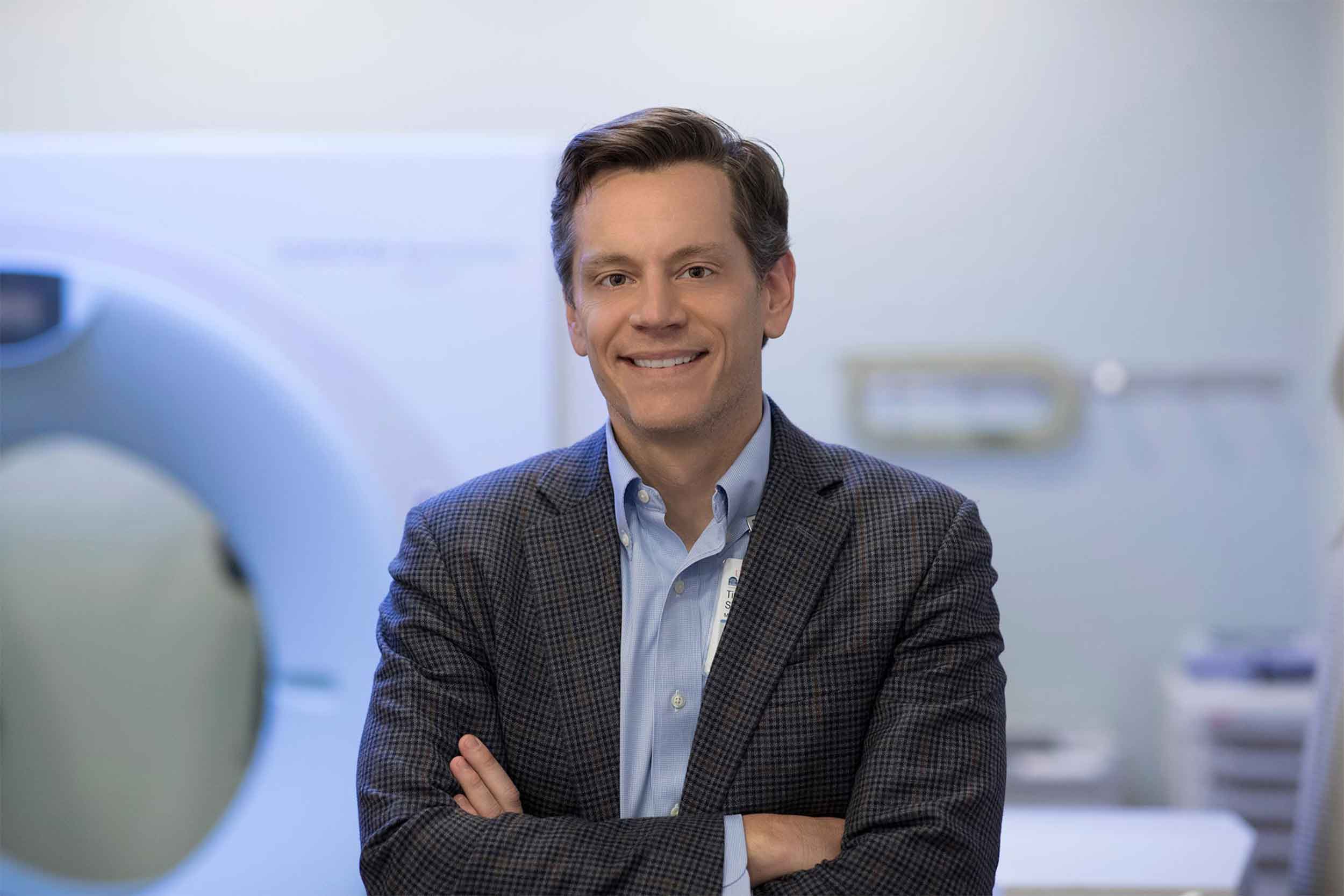

Anyone who has worked on a sponsored clinical trial knows the pain of the swivel chair: pull up the electronic health record in one window, open the sponsor's data capture system in another, and retype numbers that were already documented during the patient visit. It is slow, expensive, and error prone, and it is one of the reasons trials cost so much and take so long. On this episode of HealthTech Remedy, Drs. Trevor Royce and Tim Showalter dig into why this problem has persisted for decades and why sponsors and sites have been so reluctant to fix it.
Their guest is Zach Taft, CEO of IgniteData, whose Archer platform pulls data directly from the EHR and other source systems and streams it into a sponsor's EDC with full provenance intact. Zach traces his path from founding one of the first medical scribing companies to leading digital ventures at Memorial Sloan Kettering, where he helped incubate IgniteData and bring Archer to general availability. He explains why what looks like a simple one to one integration is really a many to many problem, and how taking small bites of structured data at a few partner sites eventually grew into a platform used by most NCI designated comprehensive cancer centers and several top pharmas across four continents.
The conversation also covers what it takes to get a health system to say yes, why CRCs are starting to prioritize Archer studies over manual ones, and where AI genuinely helps versus where it creates false hope. Zach is candid about the limits of black box models in research grade data, why nobody actually wants 100 percent of the data, and why the EDC is not disappearing any time soon. He closes with a look at where clinical research could be in ten years, from real time safety signals to recruiting patients at the moment of diagnosis, and a warning that the industry is at a crossroads between a vendor agnostic future and a fragmented one.
Episode Resources:
Introduction and Banter
Dr. Trevor Royce:
Good morning, Tim.
Dr. Tim Showalter:
Good morning.
Dr. Trevor Royce:
It's good to see you got a little scruff going today. I like it. It's good to look.
Dr. Tim Showalter:
Yeah, I'm definitely going to shave it before the day gets too far ahead.
Dr. Trevor Royce:
I'm working in my office this morning. I get up pretty early, and I've started hearing some creature in the ceiling above me, but I'm in the basement. Which means it's something that's living in our floorboards, and it sounds pretty big.
I'm kind of scared of what I'm going to find. But it's definitely nocturnal because I only hear it in the wee hours.
Dr. Tim Showalter:
Do you know what it is?
Dr. Trevor Royce:
It's got to be a mammal of some kind. It's big enough. It's definitely a multicellular organism. It's a complex species.
Dr. Tim Showalter:
That's the worst.
Dr. Trevor Royce:
I'll keep you posted.
Dr. Tim Showalter:
Yeah. I want to see on video the mouse that ends up in your trap.
Dr. Trevor Royce:
This sounds bigger than a mouse. We'll find out.
Dr. Tim Showalter:
Oh, man.
Dr. Trevor Royce:
Stay tuned on the next episode. I'll talk about it.
Dr. Tim Showalter:
I'll plop in, man.
Inefficiencies in Clinical Trial Data Collection
Dr. Trevor Royce:
All right. Let's do it.
Welcome to HealthTech Remedy. This is the show where physician leaders in health technology break down the stories behind today's most innovative healthcare companies, and we speak with the leaders building the future of medicine.
I'm Trevor Royce. I'm an oncologist and a researcher with experience in real-world data, informatics, and artificial intelligence, and I'm joined by my co-host.
Dr. Tim Showalter:
Tim Showalter, a radiation oncologist, entrepreneur, and health tech-focused physician currently focused on bringing AI technologies to workflow within healthcare.
And today we're lucky to feature a very interesting company, IgniteData, using technology to transform the clinical research process, which we know is quite a clunky one, Trevor.
Dr. Trevor Royce:
Yeah, this is always kind of a fun topic for us because we lived it and can see just the incredible bureaucracy and machinery involved in a large sponsored clinical trial and the inefficiencies in that whole process. It's painful. There's got to be a better way.
Dr. Tim Showalter:
Yeah, my experience of this would definitely echo what you're saying, that it's a very clunky process.
Just to set the context for folks, we have electronic health records now, but very often the data formatting in the particular way that that data is tracked requires pulling PDFs out of the electronic health record, completing forms directly within a research database. And it's a very duplicative and redundant system.
Of course, for clinical trial data, you need to make sure that the data is clean, and so that does require some work. But it strikes me as something that's a little antiquated that we're still maintaining study binders and saving PDFs to track the source documents. It just seems so inefficient.
Dr. Trevor Royce:
Totally, and if you think about it, you're already doing all this painful documentation when you care for a patient. A lot of that data that you need for your clinical trials is already being put into the system just in the form of your clinical encounter.
Boy, it'd be nice if you could take that data without, to your point, duplicating it and putting it directly into the clinical trial data set from your electronic health record, and cut out all the noise in between.
Dr. Tim Showalter:
Yeah, to me, in the transition step for information, it just seems like there's an opportunity to make that flow of information seamless.
And if you do need something in terms of a particular data model, why not just stick it upstream in the EHR or some step to make sure that you're collecting the right data at the right point? It just seems like it should all be connected to make sure that you've got high-quality data and that it's consistent and just part of the process overall.
Regulatory Burdens and Sponsor Risk Aversion
Dr. Trevor Royce:
Yeah, I think this is a kind of core recurring theme that we've had on the show: clinical trials are expensive, and the initial reaction is, well, I don't understand why they're so expensive to run this trial. This is a good example of just how painful it can be to run a trial.
You're duplicating the data, you're using manual input processes, you're using paper forms. It's just kind of antiquated and slow, and expensive at the end of the day.
And some of this, we can get into this, maybe we can talk more about the sponsor side and how they may or may not be incentivized to innovate in clinical trials. But a lot of this is a bit of regulatory capture, where the regulatory burden for running a clinical trial—in some ways appropriately put in for patient safety and to demonstrate the high-quality science for your trial—does carry all this baggage that makes it hard to run a trial and expensive to run a trial.
Dr. Tim Showalter:
That's so true. And I think the regulatory risk is a big concept for folks, if you just step back and think about risk in general.
On the institutional side, I've been part of building budgets from the bottom up. When you factor in 30 minutes to consent patients, 30 minutes for each of the study forms, and you figure out how much personnel time is required, you really do end up getting these pretty massive budgets. It starts to make a lot of sense.
And of course, when a site agrees to run a study, they want to make sure that they're compensated for that effort and that they're not agreeing to do something that they're not going to have the resources for.
Then on the sponsor side, of course, there's lots of risk. Imagine if it's a registration study and you're a sponsor. One, you want to make sure that the studies run quickly, so you need to have insights about the sites or you need to bring on a lot of sites, which adds a lot of money.
Then you want to make sure that the data is in the right format. That can lead you to go with data systems for the research study itself that are kind of clunky and adhere to what's worked in the past. That kind of sets a tone of not wanting to innovate too much.
Dr. Trevor Royce:
Yeah, totally. If you are a sponsor and you're running this very expensive drug trial, a registration trial, you're going to take it to the FDA. The FDA has certain expectations on how that data was collected and protected, data provenance, change logs, and all the rest.
Why would you take on the risk of working with a small, innovative startup that all of a sudden has found a new or innovative way to do this data? Sure, it may be easier and cheaper, but in the big scale of things, is that really risks that you want to take on for this trial that may sink or launch your company on the biotech side?
Dr. Tim Showalter:
And yet, it is super expensive, so there is some reason for pharma to be interested. And clinical trials take too long.
I've certainly on the multi-site clinical trial aspect seen situations where we're going with too much subjective information. A well-regarded physician might say subjectively, "Oh, I see patients like that all the time. I can enroll 20 patients on your trial." Sponsors don't really have the objective data to question that or get real numbers from an institution.
So I do think if sponsors could have more objective data to help them plan sites to go after for a clinical trial, and to project how many sites they need to bring on and which ones to make sure that they complete a study on the ideal timeline, it would be worth it to them.
And I think that's where IgniteData comes in as a company. Obviously they're taking this on and really focusing on this problem to do it at sufficient scale. I think that it becomes potentially more trustworthy to sponsors and has more relevance to the sites as well, because it can potentially streamline a lot of their research work.
Dr. Trevor Royce:
Yeah, so I think you articulated well. Fundamentally, that's the value prop: clinical trials often fail, they seem like good ideas at the time, they take a really long time. Can we improve all these efficiencies through these novel tools?
We'll talk about the solution, but it helps if you have great partnerships for this thing, like Memorial Sloan Kettering Cancer Center, who runs a lot of clinical trials and has the scale and the capacity to say, "Okay, let's try this in a better way."
Introducing the Archer Platform
Dr. Tim Showalter:
That's spot on. Well, I'm excited to hear more about their approach.
Their platform is called the Archer platform, which is described as a virtual research assistant. And we're fortunate to bring on their CEO, Zach Taft, to hear more about it.
Dr. Trevor Royce:
And I think fundamentally, the core product here is basically a data transfer system, taking that data from the EHR, the electronic health record, from the clinical encounter, and putting it directly into your clinical trial data set in a way that is accurate.
The data is what it is. It's quick, efficient, and cuts out a lot of that layer. Hopefully it makes for a better clinical trial and more accurate data.
Dr. Tim Showalter:
Well said. Well, let's cut over to the interview.
Zach Taft’s Career and the Origin of IgniteData
Dr. Trevor Royce:
Let's do it. Zach Taft, welcome to the show. We're excited to have you.
Zach Taft:
Excited to be here. Thanks for making the time and inviting me to join.
Dr. Trevor Royce:
I'm really looking forward to our conversation today. I think it'll be a lot of fun.
To set the stage, we've got the CEO of IgniteData joining us, Zach Taft. We're really excited for our conversation today.
IgniteData, I think, is most well known for operating at the intersection of clinical research and health system infrastructure, and advancing that and the synergy between the two. But historically, those areas haven't necessarily integrated well or communicated well with each other. We'd love to hear your origin story and tie that in with the origin story behind IgniteData.
Zach Taft:
Yeah, I'd love to do it. I've been in healthcare for 20 years, started one of the very first medical scribing companies, helping ER physicians look at how they can spend more time with patients and less time doing data entry work. This is going to sound like a theme throughout my career.
I ended up foregoing medical school to integrate front-end voice recognition into the Epic workflow, looking at how to make those workflows more efficient and effective, and capture high-quality data while allowing clinicians to practice at the top of their licensure.
Ended up selling that company to Nuance and then started a division in a company starting one of the very first Ambient Solutions. Again, looking at how do we capture data in the natural workflow of how a clinician practices to allow them to focus on patient care and the things why they went to medical school.
After this journey, I went back and got my MBA at the University of Michigan and had the opportunity to join Memorial Sloan Kettering and lead its digital ventures program. We were looking at how we bring companies into the institution to allow us to continue to be one of the top cancer centers in the world, while also focusing on how we help companies provide better services and better technology to cancer centers or academic medical centers around the world.
It was while I was there that we got introduced to data interoperability for clinical research. How are we getting data out of a digitally captured system like an EHR and moving that data electronically into the electronic data capture systems and EDCs that are being hosted by big pharmaceuticals and sponsors?
As an institution, we were spending millions and millions of dollars on the duplication of data that had already been captured. And with manual data entry, you're going to have misses and errors because we're human. We make mistakes. You look at so many numbers throughout the day, you're going to miss them from time to time.
Also, that data needs to be transformed and harmonized as it goes into the EDC, so it's incredibly complex. We started looking at a bunch of companies out there that could do this, and at this time, there were no companies that we had found that were doing this at scale.
There were a few that were talking about doing it, maybe one or two studies that had used what's called EHR to EDC or eSource to sponsor, but none of them at really any scale. We did find a company out of the United Kingdom called IgniteData, and we convinced them to flip into the United States and become a part of the MSK ecosystem, incubate, and take the product to GA, which we did in 2024.
That's where I left MSK to become the CEO of IgniteData, which has been incredibly exciting since I joined. Most of the NCI-designated Comprehensive Cancer Centers in the United States are utilizing our EHR to EDC platform called Archer. We're working with many of the top pharmas, several of the top CROs, and we're international, with our employees across four different continents, and we're actually providing this technology across four continents as well.
Solving the Technical and Workflow Interoperability Challenges
Dr. Tim Showalter:
Great. One question at the outset as approaching this problem: is this primarily technical interoperability, workflow issues, structural problems? What were the biggest challenges in how trials are run that you're solving for?
Zach Taft:
Yeah, great question, Timothy. There are a couple of different areas. This seems like a very easy thing to solve for. You've got data that's already being captured electronically at sites, and pharma has been utilizing EDC systems for decades. You would think that just having an API to an API would allow this data to move.
It's not that easy. Every healthcare system is capturing data uniquely, as both of you know as practicing clinicians. MSK captures a white blood count in a different format than Weill Cornell right across the street captures a white blood count. Yet, when it streams into the EDC, that data has to be harmonized and has to be uniform.
One big challenge is data interoperability: how do we get data out of source? Because of TEFCA and recent interoperability guidelines and laws and requirements, that's become easier over the last decade. In previous decades, it was almost impossible to do that, so that certainly has helped.
Number two is the way that data is being formatted at these sites; we have to create uniformity for that. As the data is streaming out, we need to be able to create a homogenous data set. Again, it's incredibly difficult because every healthcare system does this differently. As you know, a clinical trial is not run at one site; it's run at sometimes thousands of sites that are capturing data a little bit uniquely.
The last big one that we focus on is the actual workflow itself. Today, clinical research coordinators and the clinical staff are seeing patients in an environment where the data is being captured into Epic or Cerner or any one of the other numerous EHRs out there. They're not built for clinical research; they're built for patient care and revenue cycle management.
A clinical research coordinator has to go into these records today. They need to find the data, whether it's in a structured, discrete format or in unstructured data like tumor progression, staging, ECOG, so on and so forth. Then they have to open up the EDC in another window and do the swivel-chair movement of finding the data, making sure it's in the right format, and then entering it into the EDC.
There are a lot of different areas that IgniteData is tackling, from workflow to interoperability to data harmonization. The goal here is a streamlined workflow that the CRCs are using in their environment.
Think of Apple Pay, where it automatically drops your credit card and your home address and all that, and you're just confirming that it's accurate and then hitting send. That's essentially what we're doing here.
For pharma, they're getting data that is linked back to source, and they're getting it faster. On average, it takes 30 days for data, once it's been captured clinically, to enter into the EDC. We're doing that in less than three days. And we're meeting the data requirements as it's being moved into the EDC.
Certainly we're tackling a lot of different challenges. What seems really easy as a one-to-one is actually a many-to-many.
The Role of a Vendor-Agnostic Intermediary
Dr. Tim Showalter:
That's so interesting. It's a great response, and I think there's a lot in there.
A question that always comes up is: why wouldn't the main EHR system do this, or why wouldn't a CRO do it? But I think in your answer is the crux of this. This is that filtering point between the EHR, as you described, designed for filling and coding, and the research systems, which are designed for research purposes. There's got to be a connection between those two, and it's ultimately a challenge.
Zach Taft:
Yes. And the other component of that as well is every hospital system has its own unique EHR. Even under Epic, a version of MSK's Epic is going to be different than that of Weill Cornell's.
Thinking of how do we capture that data uniformly, only about 70% of data that's used for clinical research is captured in the EHR. The other 30% is captured in other areas.
Even if the EHR is helping harmonize this data or make it interoperable for clinical research, you're still missing those other areas. If you're doing central labs, it's coming directly from LabCorp. Where IgniteData sits is we are vendor agnostic. We're pulling from all these various different source systems, creating a harmonized data set, and then allowing it to go into the EDC.
One of the big challenges that we had when I was at MSK researching clinical research technology was, as a site, you're managing multiple different technology platforms and multiple different EDCs. That's a huge burden for the sites. It's expensive and time-consuming.
Clinical research IT is typically underfunded at these AMCs, just as a byproduct of clinical research IT, so having to manage all those solutions is fraught with cost overspend.
Now we're seeing the same thing on pharma. If you're having to manage multiple different instances of how data is coming into your EDC, that's no longer scalable. If you're using an eSource platform that's doing EHR to EDC or eSource to sponsor, you've got to manage that template. Typically, you're using multiple different eSource platforms, multiple different EHRs, and grabbing data from multiple different labs.
Where IgniteData sits in this is we are that focal point. All those data points are coming in and then streamed through IgniteData into a single EDC template at the pharma. It's creating economies of scale not just on the hospital side and the clinic side, but also on the pharma side. It's a good call, Timothy.
Scaling the Technology from Pilot to Enterprise
Dr. Trevor Royce:
You've articulated very nicely the incredible scale of the technical problem, and we would love to hear a little bit about how you were able to solve that and crack that nut.
Before we get into that, just to take a step back and reflect, hopefully the listeners can begin to appreciate how expensive, costly, and complicated running a clinical trial is. This is a direct reflection of that.
The overarching problem—which is what I love that you are solving—is clinical trials are so hard to execute. They're so expensive, and it's hard to accrue patients. You put a lot of resources into starting your trial, opening it, and writing the protocol, and then you can't get patients on the trial because it's complicated for sites. There are just so many ways clinical trials fail.
What you are solving for is such an important piece of that: to make this easier, advance care, develop new therapies, support the evidence behind them, and ultimately make outcomes better for patients. This is an amazing way to do that.
To go back to that initial point: how did you solve this technical issue amongst all these very different EHR interfaces?
Zach Taft:
Great question. I'll give the one-minute version of this.
At MSK, we'd been looking at EHR to EDC for a long time. Joe Lengfellner, who was the head of clinical research IT for MSK, had actually run a pilot with Yale in 2016 where they had built a prototype of this. When it's one study at one site, it's actually fairly easy to move that data, because you create the form, capture it in a homogenous format, and stream it into a data lake. In that format it was really simple. It's when we added the second and third site that there were no economies of scale, and it broke.
IgniteData took a really unique approach. It started off as a patient recruitment company, manually calling patients to recruit them into clinical trials. We don't do that today. We don't do any sort of patient recruitment; we've totally divorced ourselves from that part of the industry.
In 2019, the founders started recognizing that interoperability was going to be allowed. But there are so many challenges in how to access that data, format that data, and stream that data into either a data lake or into an EDC.
They took a small portion of a clinical trial and looked at how we at least capture the structured data first. How do we capture that data and pull it out of Epic? They partnered with University College London Hospital, and they partnered with AstraZeneca.
We took very small bites of the apple. If we can do one thing really well and it solves for 20% of data capture for a clinical trial, that's meaningful. Is it a true ROI that a sponsor is going to pay for long term? No, absolutely not. But you become really good at the little bites.
Then we started expanding our data domains, and we started expanding to other hospitals like Berkshire, also in the UK. Then we came into Duke, and ultimately came across to MSK.
When we took a look at it at MSK, it was promising, but it was very much an alpha product at that point. It was not set up for scale. There were a lot of human data points that had to be adjudicated just to even get the thing installed, and the business wasn't really set up to scale. What if you sold a thousand studies for Archer to use? How were you to deploy it at all these hospital systems?
Part of our agreement with IgniteData was to also bring in operators—people who have scaled businesses not just from zero to one, because the founders had done that, but from one to a million. I have a deep background in that, and so do a lot of members of our team, which has been incredible.
We took that within MSK, we ran IITs, and we were very data-driven on what we were solving for, the impact it was going to have, and the ROI to the hospital system first, and then we looked at the sponsor.
Most technologies in this industry, because they're sponsored by big pharma, are focused on what the ROI is for the pharma, not the ROI for the academic medical center. We took a little bit of a different tilt there, because if it's not solving the problem at the academic medical center for the clinical research coordinator, there's a very high likelihood it's not going to be adopted.
We took that site-centric approach first and then looked at solving it for the sponsor. In 2014, when the product became GA, it was in a position where we could scale it operationally. It was driving enough of an ROI, and the data was capturing and streaming into the EDC such that pharma would pay for it.
It was actually improving the way that clinical trials would be conducted, reducing queries by nearly 90%. Time to data went from 30 days to less than three days, and CRC satisfaction went through the roof. We see about 4.5 to 4.7 out of 5 in terms of user satisfaction of Archer at this point.
All those different things allowed us to take something that's been tried multiple times for decades in the industry to something that now has enterprise agreements and is BAU with some of the top pharmaceuticals in the world. And again, it's being used across border continents. That's fantastic.
Deployment Playbook and Hospital Procurement
Dr. Tim Showalter:
When you're talking to the IT systems of hospitals and the decision makers there, what does that deployment model look like? What's the playbook for putting resources together and managing that change at a health system?
Zach Taft:
Having a background of installing voice recognition technologies into Epic and other RCM platforms into the EHRs and working with IT teams at hospital systems: when installing digital healthcare technology, there are massive teams at these large healthcare systems that are involved with Epic and the RCM platforms. You know how to go through the procurement lifecycle and work with the VPs of IT, the CMIOs, the CNIOs, the chief digital officers, and so on. A lot of that is very similar for the clinical research IT side of the house, but on a much smaller scale.
When we interacted with them and were designing the product, it had to be something that was easy to deploy. If you were to go to the chief digital officer and say, "Hey, I need five resources for a year to install the IgniteData Archer platform," that chief digital officer is probably going to laugh you right out the door. I've witnessed that with other technologies throughout the years.
We intentionally designed Archer to be very straightforward. We do most of the work on the IgniteData side, but we do need a fractional Epic resource when we're installing in Epic or Cerner to help match the codes up and to make sure that we're doing that initial install meeting the coding requirements.
It's a very light lift. It takes only a matter of minutes to pull it off the marketplace and get it installed. In that first mapping, we're aligning the various different codes so that we're streaming the data accurately and able to transform that data in flight as it goes into the EDC.
It's incredibly lightweight for the initial install, incredibly lightweight for the first study. For the clinical research coordinators, they go through very light training that takes less than five minutes. It's right in their workflow, so it's easy to use.
Now we're starting to see where CRCs are prioritizing studies that are on Archer over those that are manual.
Dr. Tim Showalter:
That's a nice value add. I'm curious, in getting the final approval for a yes to implementation, who are typically your main customers for moving things forward?
Zach Taft:
Customers internal to the hospital system are usually the clinical research operations team at these healthcare systems. It can be a director of clinical research, or it can be a VP. It typically is not getting into the VP of IT or to the chief digital officer or chief medical informatics officer; typically, that's not where it's going. Most of these clinical research teams at the large AMCs have a team that's at least partly dedicated, if not fully dedicated, to these systems.
Typically where we go through is: does the technology actually work? That's always the first question, because they've been talked to about this technology for over a decade.
Number two is: what's it going to cost in terms of resources to get it installed? When we show it's a very minimal cost, and sometimes we can help offset those costs with our own resources or through a grant.
Through that, we go through the vendor assessment. Vendor assessment can take anywhere from two weeks to six months, depending on the institution. Once we've gone through vendor assessment, it usually is then a matter of days or a matter of weeks to get the final contract in place.
Once the final contract's in place, it takes maybe about a week to get it installed, and then about a month post that the first trial's patients are being put on the Archer platform. Typically it's procurement and InfoSec that is the longest part of the journey.
The Promise and Perils of AI in Clinical Research
Dr. Trevor Royce:
Fantastic. We've really covered a lot of ground in this conversation, which has been great: the problem, the nuance of the technical issues, the solution, the impact.
One thing that we haven't covered is the modern era of AI and how that has either made your job easier or harder. I would love to hear you reflect a little bit on how this modern era of AI has impacted your business and your solutions.
Zach Taft:
You'll appreciate this, and I'm sure you get this from your family as well. I have an eight-year-old. We were watching, I think it was Sunday morning a little bit earlier this year, and my son looks at me and goes, "Hey, daddy, do you ever work with AI?" And I look at him like, that's my entire job, but thanks, buddy, I appreciate it.
When his friends ask what do I do for a living, he said daddy just works. Cool. And he talks on the phone for 90% of the time, which is not inaccurate. I'm sure you with your kids probably get very similar feedback.
It's been interesting with AI in this industry. The industry wants to move incredibly fast, but individually, as pharma and as hospital systems, it's very reluctant to change. The desire to change versus the actual willingness to change are two dramatically different things.
If you think of structured data that's being captured in the EHR, we can move all that data today. That's very easy, and we can stream it into the forms.
A lot of the really big nugget data—disease progression, TNM staging, so on and so forth—is in the unstructured and often not called out specifically. In theory, large language models can find that data and surface it to the clinical research coordinator. That poses a couple of different challenges.
One is whenever you're using a black box LLM, determining how that data was rendered out and where it was rendered out is almost impossible. As you know, for clinical research, data has to link back to source and the provenance for where it was captured specifically.
Utilizing AI and simply moving that data without linking to provenance actually isn't of any value to anybody, and creates more queries and more source data verification requirements. You're not actually helping anybody. That's the first challenge.
The second challenge is you can spin up a real quick ChatGPT OpenAI wrapper on being able to pull data out of a source system and transfer that into an EDC or into a data lake. It creates this false hope that we can go after this data faster and more reliably. When you actually get it into the hands of running research-grade studies that are going to be going to the FDA, it breaks down really quickly.
The perception of where the industry is versus the reality of what we can do are two dramatically different things. In terms of helping my life, AI will have a huge impact on the way that we're going after data. In terms of hindering our life, the perception of what is actually possible to what you really want to have happen are two dramatically different things.
One of the quotes that I absolutely love in the industry—one of our competitors used to say this—was, "I can give you 100% of your data." I would always laugh at that and say, you don't want 100% of the data.
We turned on concomitant medications for one of our partners because they said they wanted it, so it streamed the entire medication list into their data lake. They wanted 5% of that data instead of the entire thing! They very quickly turned it off and said, "Yeah, we'll use your algorithm for how we want that data."
It's the same thing here. You don't want 100% of the data; you want the data that is required for the clinical trial, and you want it in a format that allows it to easily be used.
Most importantly, you want it linked back to source so you're decreasing queries, decreasing source data verification requirements, and actually able to use that data to progress the clinical trial along. Unless you're doing that in a way that is consistent, accurate, and traceable, you're really not providing any value. So Trevor, I hope that answers your question.
Dr. Trevor Royce:
Yeah, really good answer. A very thoughtful answer, and just such a reflection that you are in the trenches building this and seeing this happen in real time. It really resonates.
A 10-Year Vision for Clinical Trials and Data Lakes
Dr. Tim Showalter:
Zach, I'm curious about this. Let's say that this continues to scale and we're five to 10 years from now. What does the future look like? How is the clinical trial ecosystem different in five to 10 years with scaling this sort of technology?
Zach Taft:
This is the thing that I love. I got into healthcare originally because I had lost my mom to cancer when I was three years old, so it's always been a huge motivation for me.
I've had a lot of professional success throughout my career, and arguably I could probably be retired sitting on a beach somewhere. But I'm still angry at cancer, and I still want to help cure cancer. My goal has always been that I never want to see a three-year-old or a six-year-old crying at the bus stop because they're having to walk back to their house alone because their mom's not able to pick them up. That has always been my motivation.
One of the best areas to help in this space is in the clinical research space. I'm not a scientist; if I'm at the bench side, we're in big trouble as humanity. But I do think I'm pretty good at being able to scale businesses and look at how to bring various different parties together, like the researchers at academic medical centers with employees at large pharmaceuticals.
Where I see this going with data interoperability and being able to not have data sources siloed is the ability to see data in near real time. We heard about the FDA in near real time with SAEs; it'll be interesting to see where that goes, and it's a first good step.
In a decade, you are as a researcher and as a sponsor getting data accurately, uniformly, and more available for you—not only for the clinical trial itself, but also for study startup, digital protocol, and being able to recruit patients to where they are.
You'll be able to bring the trial to where the patient is instead of having the patient uproot their life to move to New York, LA, Rochester, Minnesota, or even down to Texas and Houston. The ability for interoperability and what it creates and opens up for us is going to be huge. It is quite literally just breaking down those barriers of unsiloing the data at the sources, but also being able to use that data more uniformly at the sponsors.
That's a high-level soapbox. Where do I see it going?
With data interoperability, being able to get access to that data for patient recruitment becomes easier. You're running the data that's needed through algorithms to be able to find who is the right patient at the point of care and accruing them immediately when it becomes available.
As both of you know, the likelihood of being recruited to a clinical trial goes down by 50% at each subsequent visit after diagnosis. If you're not essentially doing it at diagnosis, you're probably not going to accrue that patient to a trial. That's number one.
Number two is, when the patient's running through the clinical trial, being able to see risk signals as it's happening and getting it back to the research team as it's happening is going to be huge for patient care, but also for accelerating drug development. That's where EHR to EDC or eSource to sponsor comes into play.
The last piece I'll mention here is EDCs are entrenched in our ecosystem today and they're not going anywhere for decades. I think anybody who tells you the EDC is going to go away within the next few years is just wishful thinking, or they're just trying to sell you on something.
I don't think that's going to happen. But what I do think is going to happen, and what we're already starting to see, is data being streamed into a data lake where the sponsor can manipulate that data in real time. Whether or not they continue to use the EDC over time will be subject to that pharma.
Where IgniteData is uniquely positioned is, because we're linking all the data that we're capturing back to provenance and back to source, the ability for pharma to use that data and drop that data wherever they want becomes a reality. Continue to utilize the EDC, absolutely, but now starting to use a data lake to allow you to more easily and effectively manage your data is becoming a reality.
That's what has me really excited, and the industry has us really excited.
The Industry Crossroads: Fragmentation vs. Standardization
Dr. Trevor Royce:
As we head towards closing here, I think our time is coming up. Were there any topics that you wanted to cover that we didn't cover in our time together?
Zach Taft:
Yeah, I think there are a couple of big topics, but the one for me is: as an industry, we're at this focal point right now with data interoperability where we can go into paths.
Path number one is we create a unified, vendor-agnostic system for how we are linking source systems and where clinical trials are being conducted with who is actually paying for the clinical trial and ultimately doing the FDA submission.
We're at a place right now where that can happen, where it's like electricity: you just flip a light switch, you get the electricity. Our vision as IgniteData is we want to see that vendor-agnostic solution so we can create economies of scale, uniformity, and data integrity across the various different value chains of the care system.
The other route that we can go down is essentially the EDC route that we've already seen: disparate systems, different technologies, disparate ways of doing things.
That will create diseconomies of scale as hospital systems and community organizations have to continue to manage multiple different platforms, and pharma is getting disparate data dropped into their data lakes or EDCs that then requires them to spend a lot of man-hours, time, and expense, and slow down clinical trial development timelines.
That's where this industry is at that focal point. I would say to academic medical centers and those conducting clinical research in the community: really focus on a vendor-agnostic solution, whether it's IgniteData or another solution. That will bring scale to your organization and make it cheaper for you to conduct clinical trials, which is the thing that we hear from almost every site. It's becoming more expensive and more laborious. It's an opportunity for you all to demand uniformity and demand economies of scale.
From the pharma perspective: you have a lot of money and you like creating your own IP. Do that from the perspective of how to create uniformity and scale for sites in a vendor-agnostic ecosystem, not trying to pit all these vendors in the industry against each other to create a fractured ecosystem.
I'm really excited that we're there. We as IgniteData, we as MSK, and we as an industry are championing that kind of economies of scale and uniformity in clinical trial technology.
Dr. Trevor Royce:
Fantastic. Thanks for sharing those insights. I am very excited about what you guys are working on, and it feels like this is finally a turning point in the clinical research infrastructure where this vision that you just laid out is starting to become a reality. We appreciate you taking the time to chat with us today.
Zach Taft:
Absolutely. Thanks for having me. It's an opportunity to really create change that we'll see amongst our own family and friends as we continue to progress in this industry. Thanks for having me. It was an absolute pleasure.
Dr. Tim Showalter:
Great. Thanks so much, Zach.
Dr. Trevor Royce:
Thanks so much for joining us, and we'll catch you next time on HealthTech Remedy. Thanks there.
HealthTech Remedy is produced by Podcast Studio X and is powered by BuzzyPod.