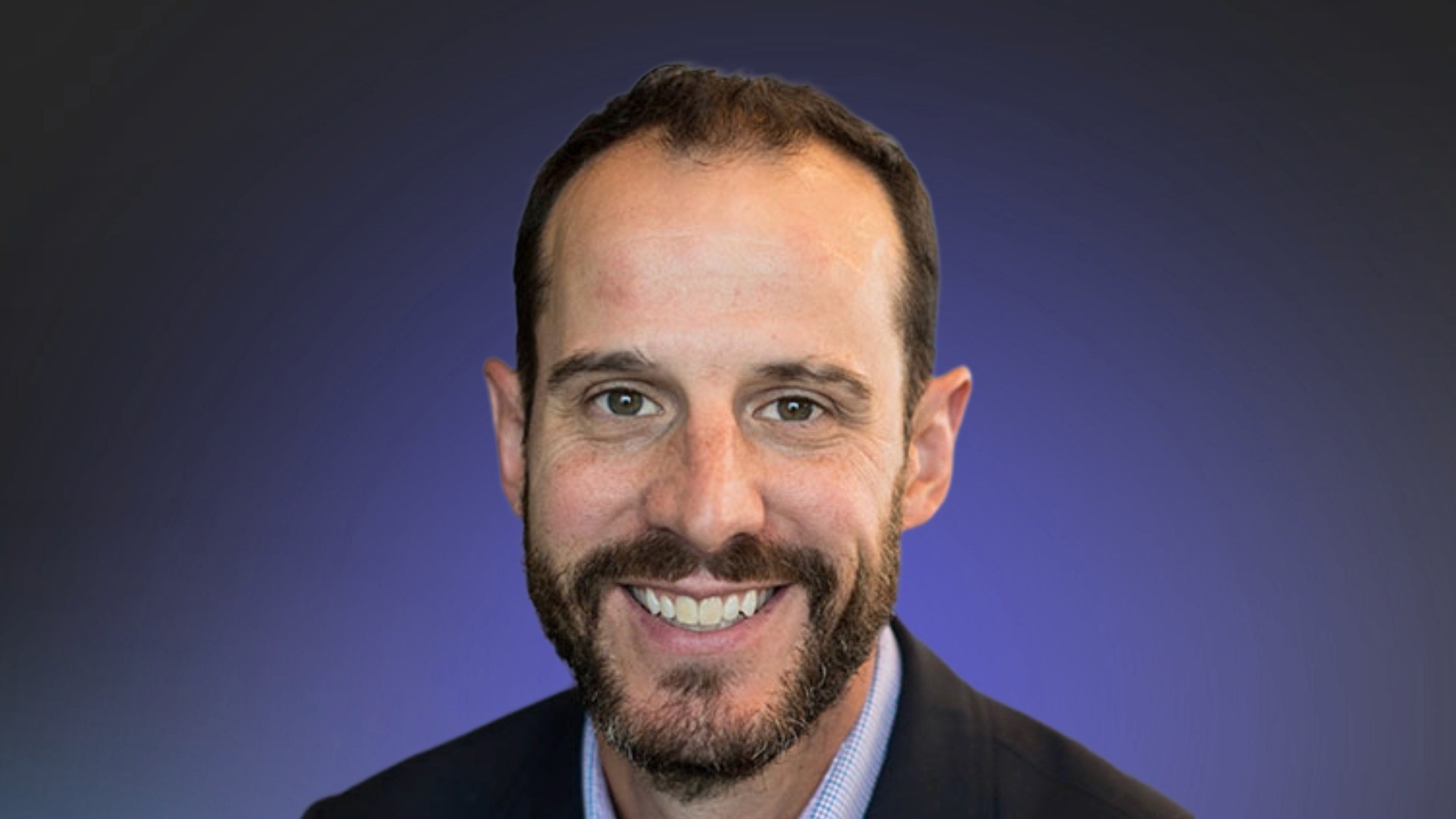

Is the traditional healthcare system failing both patients and employers? In this episode of HealthTech Remedy, we sit down with Dr. Jeff Wells, CEO and co-founder of Marathon Health, to explore how his company is radically redesigning employer-sponsored healthcare. Tune in to discover how moving away from the broken fee-for-service system can actually improve patient outcomes, increase clinician retention, and drastically reduce healthcare costs for businesses.
The hosts and Dr. Wells break down the core philosophy behind "advanced primary care," a hybrid delivery model combining on-site, near-site, and virtual clinics that meets workers exactly where they are. They examine the stark differences between traditional health systems and Marathon Health’s value-based care approach, highlighting how 30-minute appointments and seamlessly integrated behavioral health lead to a massive reduction in hospital admissions. But how exactly does this employer-driven model manage to pay for itself in year one while simultaneously solving the notorious primary care shortage? You will have to listen to find out how Marathon Health's tech-enabled infrastructure is successfully flipping the economics of population health management on its head.
If you are passionate about the future of medical delivery and health tech innovation, be sure to subscribe to HealthTech Remedy and leave us a review.
Episode Resources:
Introduction to Marathon Health
Dr. Trevor Royce:
Welcome to HealthTech Remedy, the show where three physician leaders in health technology break down the companies, the care models, and the market forces shaping the future of healthcare.
I'm Trevor Royce, radiation oncologist and a researcher focused on real-world evidence, informatics, and AI diagnostics.
Dr. Paul Gerrard:
And I'm Paul Gerrard. My background is in physical medicine and rehabilitation, reimbursement policy, molecular diagnostics, and market access for emerging health technologies.
Dr. Tim Showalter:
And I'm Tim Showalter. I'm a radiation oncologist, health tech executive, and entrepreneur focused on how care models and technologies actually get translated into better outcomes for patients.
Dr. Trevor Royce:
Today, we're excited to talk about Marathon Health, a company that has quietly become one of the most important players in employer-sponsored primary care delivery.
They have essentially rebuilt primary care for workers and their families through a combination of on-site clinics, near-site centers, network sites, virtual care, behavioral health, occupational health, pharmacy care navigation, and it merged with Everside Health in 2024.
It’s grown to a pretty big place. There are three million eligible patients, 650 employer and union clients, and more than 750 health centers across 41 states.
The Primary Care Shortage
Dr. Paul Gerrard:
The reason this matters now is let's talk about something that people have been talking about for probably my lifetime. There is a primary care shortage. Rural America feels that hard and has been feeling it harder and harder.
HRSA reported in late 2025 that there were over 8,000 designated primary care shortage areas affecting about 92 million people. The country would need over 15,000 additional physicians just to eliminate those shortage designations.
At the same time, the AAMC, the organization that represents academic medicine, continues to project a substantial physician shortfall, including a projected shortage of 20,000 to 40,000 primary care physicians by 2036.
The key takeaway is there's a primary care shortage. There has been for a long time. The conditions are such that while there are lots of needs to fix it, the system is not meeting those needs.
The Employer's Perspective on Healthcare Costs
Dr. Tim Showalter:
I will just echo that. As a physician myself, trying to get an appointment with a primary care doctor is not easy. I'm lucky that I was able to pull some strings within my own health system.
But this is a story you hear a lot. I hear it from patients all the time and I hear it from friends about how challenging it is. If you think about it from the employer's perspective, they're really experiencing the downstream effects of that breakdown.
When primary care is hard to access, then people don't get care. They don't get preventative measures, chronic disease can spiral out of control, and things can go missed.
Ultimately, not only are they paying for it through the health plan, but they're also having lost productivity from their key workforce. From the cost perspective, healthcare has continued that march upwards and annual premiums have continued to rise.
Family premiums are up at least 20 or 25 percent over the past five years with increasing costs for employers. They're obviously interested in doing something to be part of the solution.
Dr. Trevor Royce:
The idea of having your employer responsible for your healthcare coverage is in some ways a uniquely American setting. This is exactly where Marathon Health is sitting.
There are clear trade-offs, and it’s probably beyond the scope of our discussion today about how the citizens of America are getting their healthcare. But clearly, Marathon Health is trying to help employees get better coverage for their workers and have a more productive workforce.
If the traditional delivery system can't reliably provide timely, relationship-based, longitudinal primary care, then the employers and unions are stepping in and acting less like passive payers and more like real healthcare architects.
Marathon Health's Hybrid Delivery Model
Dr. Tim Showalter:
From our perspective, obviously, this is the health technology podcast. What's interesting about the Marathon Health model is that the idea of a clinic at work is not new.
Getting basic blood work drawn or having a clinic in case you're not feeling well has been around for decades. But in addition to having clinics at the workplace, Marathon has this interesting model where they have near-site clinics and network health centers.
They also have virtual primary care resources available in all 50 states. It’s a model of meeting patients where they are. One of the challenges is getting time off work to go see a primary care doctor during business hours.
Patients often have the same business hours as providers, which can be challenging. Having it at work, but also being able to supplement that, addresses some of the schedule challenges as well as some of the geographic challenges.
Dr. Paul Gerrard:
That really gets at the scalability question. Historically, employer-sponsored clinics worked well for giant self-insured employers with a concentrated geography where you could have the clinic within the same geographic location as the employees.
But that doesn't describe a lot of employers, especially as we get increasingly into a world where there is remote work. Marathon is really trying to widen that aperture.
By September 2024, they said their open access network had expanded to roughly 100 network locations in 46 metropolitan markets, giving them locations across 41 states.
In March of 2026, Marathon announced another expansion to five new metropolitan regions, which means they're still growing and geographic growth is still an important lever for them.
Dr. Trevor Royce:
They position themselves as capturing the whole health and being very flexible. As we mentioned, it is the on-site clinics or the nearby close proximity clinics, but also the virtual element which has really taken off in the COVID era and beyond.
Measuring the Return on Investment
Dr. Paul Gerrard:
The central question then is, does this save money? Does it make primary care more accessible, or does it just redistribute where care happens? Marathon has been pretty aggressive in making the return on investment case.
In June of 2025, they released a large claim study with an independently assessed methodology that spanned more than 3 million records. Under reasonably conservative assumptions, Marathon reported its advanced primary care model pays for itself in year one.
It reaches over a three times return on investment by year five, with engaged members having 21% lower claims costs and 82% higher primary care utilization, 15% fewer ER visits, and 41% fewer inpatient admissions.
With reduced utilization of some of those high-cost services, you can very well imagine how this could save money pretty quickly.
Dr. Tim Showalter:
I think that's spot on, Paul. Ultimately, the strongest argument here is a financial one. Those metrics are hard financial metrics that would be easy to motivate at a C-suite level decision regarding investing in services like this for an employer.
You can imagine that a lot of companies in a similar situation would make softer arguments about the experience or process-based outcomes, like meeting quality objectives.
But when you can back that up with a story of real engagement with patients who are part of the workforce and actual dollars saved, I think that's such a strong argument.
Technology and Predictive Analytics
Dr. Trevor Royce:
The other piece is that they frame their services as tech-enabled. They have this whole side of data and predictive models to identify at-risk employees.
This all gets to the idea of identifying those employees that might get sick and getting them before they start missing work to keep a productive workforce. They've got some pretty interesting case studies.
Some of this is marketing material, but they talk about the state of Colorado and cite over $1.4 million in savings from that relationship by keeping those residents healthy.
It goes to show the diversity of their customers, where they are dealing with employers, states, and unions. They are really trying to address a very diverse population.
The Core Philosophy of Advanced Primary Care
Dr. Tim Showalter:
The focus on primary care is the wedge here in terms of saving costs overall. Some models for managed care have historically understood that if you had good primary care in place, it would lead to better outcomes.
That means better medication adherence, better use of indicated screening tools, catching disease earlier, making the right referrals, and avoiding unnecessary ones.
The problem is that breaks down in the real world if you don't have sufficient access to primary care where you can get timely visits and have an ongoing relationship. You lose that navigation point.
Dr. Paul Gerrard:
On its employer-facing materials, Marathon sounds like they are leaning hard into designing things the opposite way. They emphasize same-day or next-day appointments, less than five minutes of wait time, and 30- to 60-minute visits.
A big question is how Marathon makes the economics of that work when the entire rest of the healthcare system can't seem to make the economics of that work.
I can very well believe it enables better quality primary care and is some of what enables those savings they're seeing from downstream utilization. It’s not just primary care; it’s trying to provide high-quality primary care.
Dr. Trevor Royce:
I think that gets to how they frame their primary care as advanced primary care. It’s high-quality care, and it isn't like concierge medicine. It's really workforce-focused, value-based care.
Integrating Behavioral Health
Dr. Paul Gerrard:
Something else they mentioned is behavioral health. We've slowly become increasingly aware of that over the past 20 years. Marathon explicitly integrates mental health into the care platform through Live Better.
It is designed to sit inside the primary care model rather than next to it. The company states that engaged patients using both mental health and primary care services saw 45% savings, averaging over $6,000 with measurable improvements in depression and anxiety symptoms.
Dr. Tim Showalter:
That’s a smart move. Behavioral health resources can be one of the biggest failure points and benefits because they are often hard for employees to access.
There is some stigma attached to it unless you specifically make it available and easy to access. There are a lot of vendors out there, so it can feel a little chaotic to an employer or a benefits manager.
When it's paired directly with the trusted primary care relationship and has a home in that care setting, my sense is it probably improves engagement and receptivity to accessing those resources.
Dr. Trevor Royce:
I like that it's fully integrated. A lot of employers would go and get a new vendor specifically for behavioral health, but Marathon Health is trying to tackle the idea of complete care or whole health.
Mental health issues can make physical issues like diabetes control worse. It’s all related and ultimately can result in decreased productivity. This is the right approach having this complete care model.
Infrastructure and Provider Retention
Dr. Tim Showalter:
Let's think about how this model is different overall. The fee structure is different than a typical fee-for-service model. The other part is its operating infrastructure.
The scale Marathon received after the Everside merger involved integrating hundreds of health center locations into a single platform that unifies all of that.
Members can potentially be seen at multiple different locations and access virtual services. That is not a glamorous part of the overall operating system, but it does matter.
If you're trying to operate a new type of system at scale and serve national employers, you need to have consistent workflows and analytical dashboards. Having that connectivity on a single EHR and system is core to the product here.
Dr. Paul Gerrard:
On the workforce side, the provider retention number stands out. There is a shortage of primary care providers and they tend to burn out. If you are trying to focus on primary care, you need to have retention of those limited resources.
Marathon's model depends on offering clinicians a sustainable structure. Longer visits, more continuity, less billing friction, and a team-based environment are what they are trying to do to retain that talent.
The Future of Primary Care Models
Dr. Tim Showalter:
I think the biggest question is how this fits over the long term. Is this ultimately where primary care is headed? We've talked about how technology platforms and artificial intelligence may really empower primary care.
The ability to serve more patients, address root causes of burnout, and access specialty knowledge at the point of care is really promising. I'm curious to see if primary care can be built with tools and models like this outside of the traditional health system.
Dr. Paul Gerrard:
I guess we'll see how things ultimately end up working. This shows that the costs of healthcare are rising to the point where now employers are willing to take the risk and put in the effort to consider new models.
There was a time when it was easier to absorb the cost inflation and hope that the legacy system improves. But the cost pressures are intense and employers are willing to look outside of the legacy system for models that provide new approaches.
Dr. Trevor Royce:
I look forward to having Jeff Wells on and hearing his take about his experience at Marathon Health. I'm cautiously optimistic. Fixing primary care in the U.S. is so challenging and many different folks have tried to do it.
My perspective on the role of the employer in healthcare has changed over time, but there's a balance to be reached where different populations have different needs. Marathon Health is certainly carving out an important role from the workforce perspective.
Dr. Tim Showalter:
This is an interesting one to follow because it's a fascinating model. They're the best example I can think of of a real, complete redesign operating at a national level with better aligned incentives and integrated services.
Dr. Trevor Royce:
That's a great discussion. I think we've set the table nicely for our interview coming up with Dr. Jeff Wells. He's the CEO and co-founder of Marathon Health. We'll chat with him about where his model works and what they're doing to fix primary care.
Interview with Dr. Jeff Wells
Dr. Tim Showalter:
Jeff, welcome aboard.
Dr. Jeff Wells:
Thanks so much. It's great to be here.
Dr. Tim Showalter:
Great to have you. We've been looking forward to this. There's a lot of discussion right now about primary care access in the United States, particularly in rural communities with rural healthcare initiatives. Your team at Marathon Health is taking a really interesting approach.
Dr. Jeff Wells:
I really appreciate the chance to connect. You guys have built a really cool platform, so I’m excited for the chance to chat.
Dr. Trevor Royce:
I can kick things off. It makes sense to start with the problem that you guys are solving for, and boy, is it a big problem. We’d love to hear your thoughts on the specifics, particularly how the solution you guys are building hopes to address issues rural patients face.
Solving the Access and Prevention Problem
Dr. Jeff Wells:
I would start with the thing that almost all of us know, which is that healthcare costs too much. It's an enormous burden on families, businesses, and really all of us in the United States as taxpayers.
The question is really what's driving that increase in cost? It's not just the pocketbook pain, but it leads to real human challenges, like an inability to access care altogether or a delay in a diagnosis.
Just in my own experience, I recall being a medical student and a resident in internal medicine. As you work in the ER or the hospital, you consistently see individuals show up. Two things really struck me.
One was the number of people that would end up in the emergency department for something that was not an emergency. They were there with anxiety, depression, or a low-grade set of headaches.
A reasonable person would argue that was not the best place to help address that situation. Or they would be there for an exacerbation of an underlying condition that just wasn't being very well managed.
I think about diabetes that goes undiagnosed or poorly managed, and all of a sudden someone has a DKA crisis or a really bad infection that leads to an amputation. I was struck by how this could happen in the richest country in the world.
Our conclusion was the recognition that we don't have enough primary care available to patients much earlier in their journey. Secondly, we have too much focus on managing disease and not enough on prevention. That's what we're trying to solve for.
The Business Challenge of Rising Healthcare Costs
Dr. Trevor Royce:
I really appreciate that. My wife works in emergency medicine and I feel that, seeing a lot of these rural-based patients coming into the emergency department for the exact reasons you're describing. Can you reflect also on the employer side?
Dr. Jeff Wells:
For companies across the United States, the growth in the cost of healthcare is becoming a real business challenge. Over the last 10 years, it's grown by over 150%. Healthcare costs are growing at over two times the rate of inflation.
Outside of wages, for most companies, it's the next largest line item in the budget. Everybody's trying to wrestle with how to mitigate those costs so we can push them back into wages to help the middle class.
Secondly would be the negative impact of poor health on worker engagement and productivity. Whether it's knowledge workers dealing with stress or manufacturing employees dealing with musculoskeletal challenges, it gets in the way of their ability to do their job.
Defining Advanced Primary Care
Dr. Tim Showalter:
Jeff, thinking back to the example of a patient in the emergency room because their diabetes wasn't taken care of, it’s almost like the patient's chief complaint is the lack of previously being taken care of.
It's not just that the primary care office is not available; it's that fundamentally they were not being served. Marathon focuses on advanced primary care. Can you give us more context on how that redesign shows up in your offerings?
Dr. Jeff Wells:
For decades, literature has demonstrated that if a patient has an established relationship with a primary care provider, it leads to improved health outcomes. It suggests about an 18% reduction in all-cause mortality and costs roughly 25% less.
What distinguishes advanced primary care are really three things. The first would be this intentional, proactive approach to population health management. We tend to work with an employer or a union trust with a finite set of patients.
We don't just wait for someone to have an illness and walk through the front door. Our team uses data to understand the risk of that population and proactively reaches out using digital tools or personal outreach to engage folks earlier.
The second component would be creating more time and space with the patient and provider together. The average appointment duration for us is over 30 minutes, compared to more traditional care where it might be eight to 14 minutes.
We really try to create the ability for that patient to feel heard and for the provider to focus on trust and relationship building to enable positive behavior change. Most of primary care is really helping to inspire changes in lifestyle.
The third piece would be value-oriented care guidance when specialty care is required. If you create time and space, there's a lot of care that can be done within primary care that avoids unnecessary testing and referrals.
The right mandate for an independent primary care provider is to help the patient get to the highest value provider. Advanced primary care doesn't really work in a fee-for-service environment. You have to have some kind of value-oriented reimbursement model.
The Provider Experience and Tech Infrastructure
Dr. Tim Showalter:
It’s a compelling vision. As a physician in a fee-for-service model, our EHR has been criticized as being made for billing. Can you give us perspective on what things look like from the provider's perspective?
Dr. Jeff Wells:
We have a unique advantage in our ability to recruit fantastic providers. We have family physicians, physician assistants, and family nurse practitioners. We also have mental health counselors and physical therapy fully integrated as part of the team.
Folks want to come work with us because they get to spend more time with the patient. There's less focus on documentation for billing purposes because we're not submitting claims to an insurer to get paid.
Our relationship is directly with the employer or union trust. They pay us typically a fixed monthly fee, and then we put a portion of that at risk tied to the outcomes. Providers get compensated on a fixed salary basis with a bonus tied to quality of care, not RVUs.
We’ve had to curate a thoughtful tech platform, which we refer to as our Ignite platform. We use athenahealth as the core of our electronic health record for clinical documentation and care management, but we don't care about revenue cycle management or billing tools.
Operational Scale and Logistics
Dr. Trevor Royce:
Are the docs employed by you, or is that a separate arrangement? And who owns the physical clinical space?
Dr. Jeff Wells:
We have found from the beginning that we can build the right type of culture and enable the best outcomes by having an employed, fully dedicated model. All the clinical teams are employees of Marathon Health.
Marathon Health today works with about 650 different employer organizations. It's a really diverse group including manufacturing, public sector entities like states and school corporations, and trade unions.
We operate about 720 physical health centers. Some exist on the campus of our client. In that case, the employer owns the space. In other cases, Marathon Health will set up health centers in retail settings where we are leasing the space.
There are about 130 locations managed by Marathon Health that are shared by multiple different clients. Those are concentrated in about 15 markets across the country.
The Patient Experience and Rural Access
Dr. Trevor Royce:
Can you talk a little bit about what the experience might be like for a complicated patient living in a rural area?
Dr. Jeff Wells:
I’ll start with a story. There's an individual named Santana who is a production employee in a rural part of the South. For years, she was having malaise, fatigue, and muscle pain.
She saw a number of different providers in urgent care and ER settings and was largely told nothing was really serious. When the Marathon Health center opened, it was very easy to get in.
Christy, who's a nurse practitioner, worked with Santana and did a much more thorough history. She really listened, did some follow-up work, and Santana was ultimately diagnosed with non-Hodgkin's lymphoma.
She was able to engage in proper referral and treatment and has actually been cured. The key features are frictionless access—making it as easy as possible to get in without days or weeks of waiting.
We use simple tech tools to collect data up front so when you come to the health center, you're getting right into an exam room and maximizing time with the provider. You feel heard because someone is being empathetic.
The third piece would be closing the loop. Often in traditional healthcare, a referral recommendation just doesn't happen due to cost or convenience barriers. We’re able to close the loop; 90% of mental health referrals are fulfilled within Marathon Health.
Drivers of Healthcare Cost Reductions
Dr. Tim Showalter:
The fascinating side of this is that you're seeing reductions in cost, potentially 25 to 30%. What are the big drivers for cost savings?
Dr. Jeff Wells:
The RAND Corporation has done a lot of work in this area, and it's been argued that fully up to 30% of healthcare spending in the United States is wasteful. There are things being done with zero evidence that they are beneficial to patients.
We also have duplication of services because people are busy and don't have time to look. If we can get people engaged earlier, focus on evidence-based care, and lean on lifestyle modification, you can directly reduce that downstream spending.
The first thing we'll see is a reduction in emergency room and urgent care utilization. Then over time, we'll see a reduction in diagnostics like advanced imaging.
Finally, we see a reduction in specialty care utilization and hospitalizations. For example, folks with chronic low back pain often get imaged and referred quickly for surgery. In most cases, that can be avoided with physical therapy and weight management.
Advice for Future Healthcare Leaders
Dr. Trevor Royce:
We’re coming up at time. What advice do you have for aspiring young physician and non-physician entrepreneurs?
Dr. Jeff Wells:
I will take a moment to shout out the Indiana Hoosiers. Multiple generations graduated from IU, myself included. We are very proud of Coach Cignetti and the whole team.
In terms of your question, things are more fulfilling when you lean into where you have passion. I would follow that as opposed to trying to do something artificial because it seems like a good idea.
Secondly, I believe those in the best position to help us redesign healthcare are clinicians. They understand the nature of disease and what it means to be at the bedside.
For too long, professionals within healthcare have abdicated responsibility around finding a sustainable economic model. We can provide great care, but today it's just so expensive.
If you're an earlier physician and have any aspirations of leadership or entrepreneurism to design a model that works, you should do that. No one is in a better position to be successful.
Dr. Trevor Royce:
Fantastic. Thanks so much for sharing those thoughts. It's been an incredible story of growth and impact.
Dr. Jeff Wells:
Trevor and Tim, I really appreciate it. You guys have created an awesome platform to help advance healthcare in the right way.
Dr. Trevor Royce:
That'll do it for this episode of HealthTech Remedy. Thanks so much, Dr. Jeff Wells, for joining us today. Hear you all next time.
HealthTech Remedy is produced by Podcast Studio X and is powered by BuzzyPod.